Hi friends, in today’s article, let us embark on a journey to understand the concept behind the plethora of Temples, Gods and Goddesses, that the so called HINDU worships. I coined “so called” because, HINDU is not a properly defined term. For that matter, there is no “-ism” in the culture associated with the so called HINDUISM. But, due to its vast usage now a days, we have no other way than to go with the flow and correct our understanding along the way rather than correcting everyone else. From here on, we will speak of Hindu and Hinduism with the meaning that, these words imply an ancient unbroken chain of culture under the modern garb.
In India, we see many temples whose shrines are embedded with many idols. These idols are worshiped in as many ways as there are ripples in human mind. Worship forms one of the primary aspects of Hinduism. Even if not for worship, many Indians do visit the temples for their aesthetic beauty or the culture associated or something else. My goal in this article is to give keys to understand the underlying core concept of these temples and the idols of gods and goddesses there in.
There is a misconception that most of the devotees worship out of fear and not devotion. We are no one to judge others. So, I do not stand with that notion. Whatever may be the source of inspiration for worship, we see people worshiping and that is what matters for our exploration right now. In the culture handed down by ancient Indians, the definition of worship is something like this: “That which you see outward is verily that which exists inward. Because the layer of ignorance is strong and veils us from looking inward, we need to see the same outward and try to form a harmonious link. This, over the time, brings us back to the core – ONE in ALL and ALL in ONE“. This forms the premise of worship.
Given this premise, then it is natural to see that “art of worship” via – Yāgās, Yajñās, Kratūs, Pūjās, etc., have the elements of harmony with Nature. If not, they become “Dark Arts” or “Kṣudra Vidya” and lead humans to the former stages of evolution in the karmic cycle. To protect ourselves from such slippery slopes, there arose a field of scientific worship called – “Āgama Śāstrās“. It is from these that the modern-day temples, idol worships, house-hold worships, etc., have sprung forth and it is by following their guidelines that these have evolved. So, if one wants to understand HINDU way of worship, they need to go back to the wisdom handed down in the name of “Āgamās“. Let us not go into too much detail, but proceed to the core of this article now.
Unlike other religions, HINDU never had a “public place of worship”. It is wrongly understood that a temple is a public place of worship. Rather, a temple is an institution for those who are ready to try to form the aforementioned link between their inner selves and the outer world. How so? This is understood by noticing the structure of temple, their geographical locations, the installed idol, the mechanism of maintenance of the temple, etc. Without forming a harmonious picture of all these things, if people argue that a temple is place of worship/prayers for all, then it is they who lose the complete import and purport of building such a temple by who ever built it in the past. Modern ideas should not be rubbed onto the existing culture. Rather, they need to be reviewed under the shadow of this ancient culture. If not, they break the shadow giving tree and expose themselves to the heat of friction of differences and ruin themselves.
So, first, let us step by step understand what a temple is through the elements associated with it.
Depending on the purpose of the temple, the structure varies. But, widely speaking, there is a uniformity in this diverse nature of the structure of a temple. That is the following:
Of course, if you go to wiki or some other links, you might get many more names and details. But, for the hints that I want to embark upon, these six elements suffice.
Previously I said that the purpose of a temple is to form a link between the inner and outer worlds. The clue is our body. It is by taking our human body as a seed symbol, did the ancients design the structure of a temple. I will explain this fact as we proceed, but keep this idea in mind.
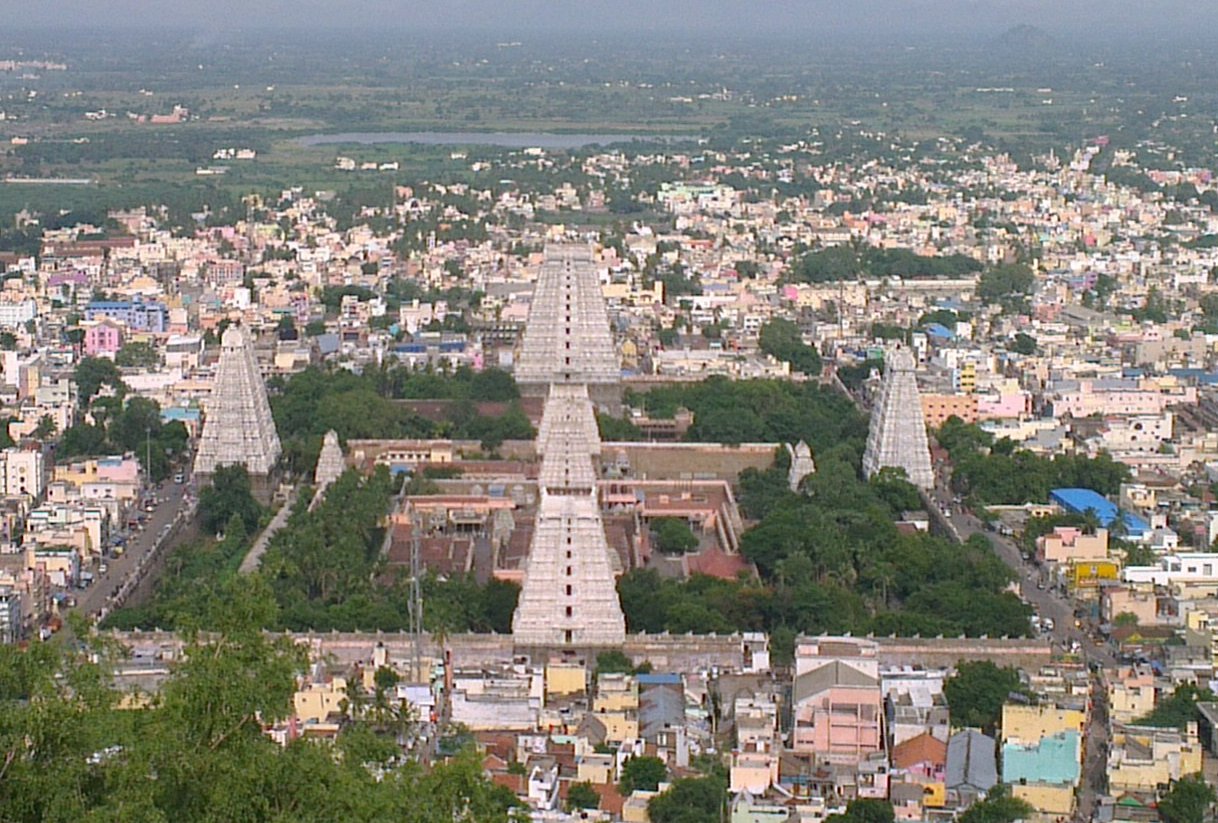 (The square like walls/boundaries for the prākāra of the temple – Aruṇāchalam)
The boundary wall. This is the first and foremost part of the temple, that we encounter. This acts as the “Physical Layer” of a human body. It forms the defensive wall as well as the solid support to the whole scheme of temple. In ancient most temples, one can see 7-boundaries (concentric) before one actually enters the inner-temple. These 7-Walls are known as “Sapta Prākāra” which are built in resonance with the “Sapta Dhātūs” or “Seven Tissues” of human body as explained in Āyurvēda and Dhanurvēda. It is due to these 7 tissues that a human body exists as is, and it is due to these 7 walls that a temple stands as is.
These are the doors that allow a person to enter. These doors some time can be 4, 8, 9, 10, etc. When 4 doors exist, it means the temple is built based on the structure of our perception of 4 cardinal directions. When there are 9 doors (as in Ayōdhya of RāmāyaṆa), they are symbolic to the primary orifices we have in our body that allow the signals from the objects of senses to enter the body or the reciprocation signals out of the body. In this way, every number associated to the number of doors, has a reason behind its construction. Also, each of the aforementioned boundary walls, being concentric, they have varied number of doorways suggesting the varied purposes and symbolism. But an ultimate immutable truth is that, a true devotee who enters the temple, as the ray of light from an object into the eye, is purified and returns out of the temple, as the sweet vision of the object, the whole purpose being transformation from without to within.

They are the towers that are built over these said doors. “Gau” in Sanskrit means LIGHT. “Pura” means a city or an abode. As mentioned before, the doors are pathways for incoming and outgoing devotees and the associated properties of “number”, the gōpura acts as the “watch tower” or the guiding LIGHT. Along the direction associated with these doors, used to be many flocks of people living in the name of villages. Thus, these towers also acted as guiding towers for all the devotees of that direction – landmarks.
Many designs exist on these tower structures which suggest their esoteric meanings. For example, on a southern door, may be a bull or lord yama and on the eastern door may be a horse or sun god. They suggest the entrance of soul into a body or soul awakening in a body respectively. By knowing the doors, a seeker can start their entrance into the temple, depending on their purpose of contemplation. After all, the whole act of entering, being inside and exiting the temple, form a totality of worship and hence, it is an important part to realize the meaning of Gōpura.
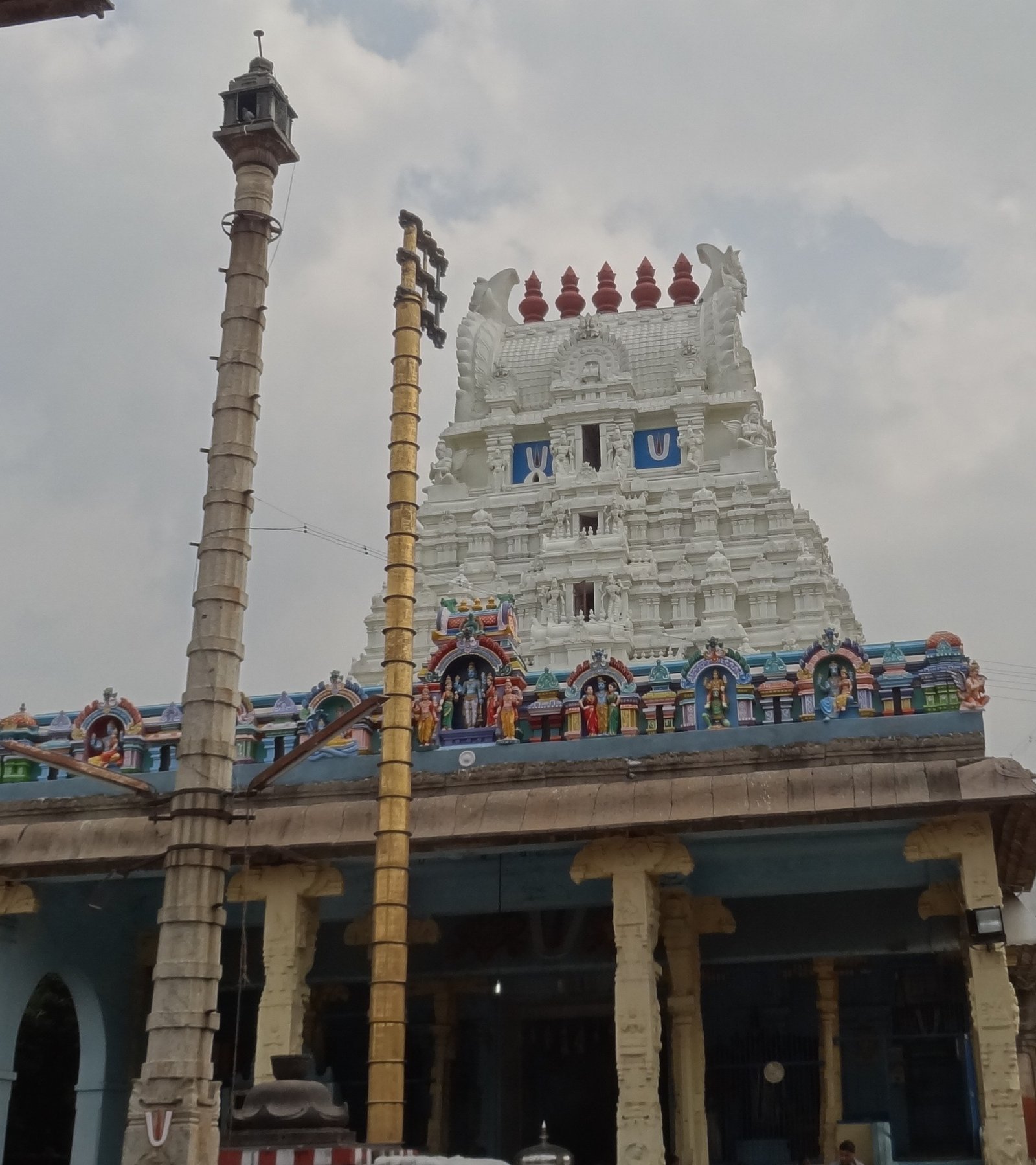
As we cross these boundaries via the doors underneath the towers, we see a pillar like structure that is erected right in front of the innermost temple. This is a replica of our “Backbone“. Just like our backbone has many segments, this pillar too has many sections in it (including the fine divisions we can often see 31 akin to a spinal cord). Just like there are 6 centers (ṣaṭ chakras) in our backbone, one can see 6 divisions, associated with these chakrās, on this pillar like structure. There are many bells decorated to suggest that it is the column of Nāda (suṣumna – center canal of backbone).
Before building any part of the temple, they first erect this Dhwajasthamba. Before our body is built, the first structure that forms is the head like ball and from it the protruding backbone. In vēda it is said that this backbone, having 6 centers (7th being in head), weaves the whole material body around it like a thread bundle, the threads being the many nāḍīs or field lines of life over which matter is superposed. Akin to this concept, first the pillar is erected and only then any other construction of temple is undertaken.
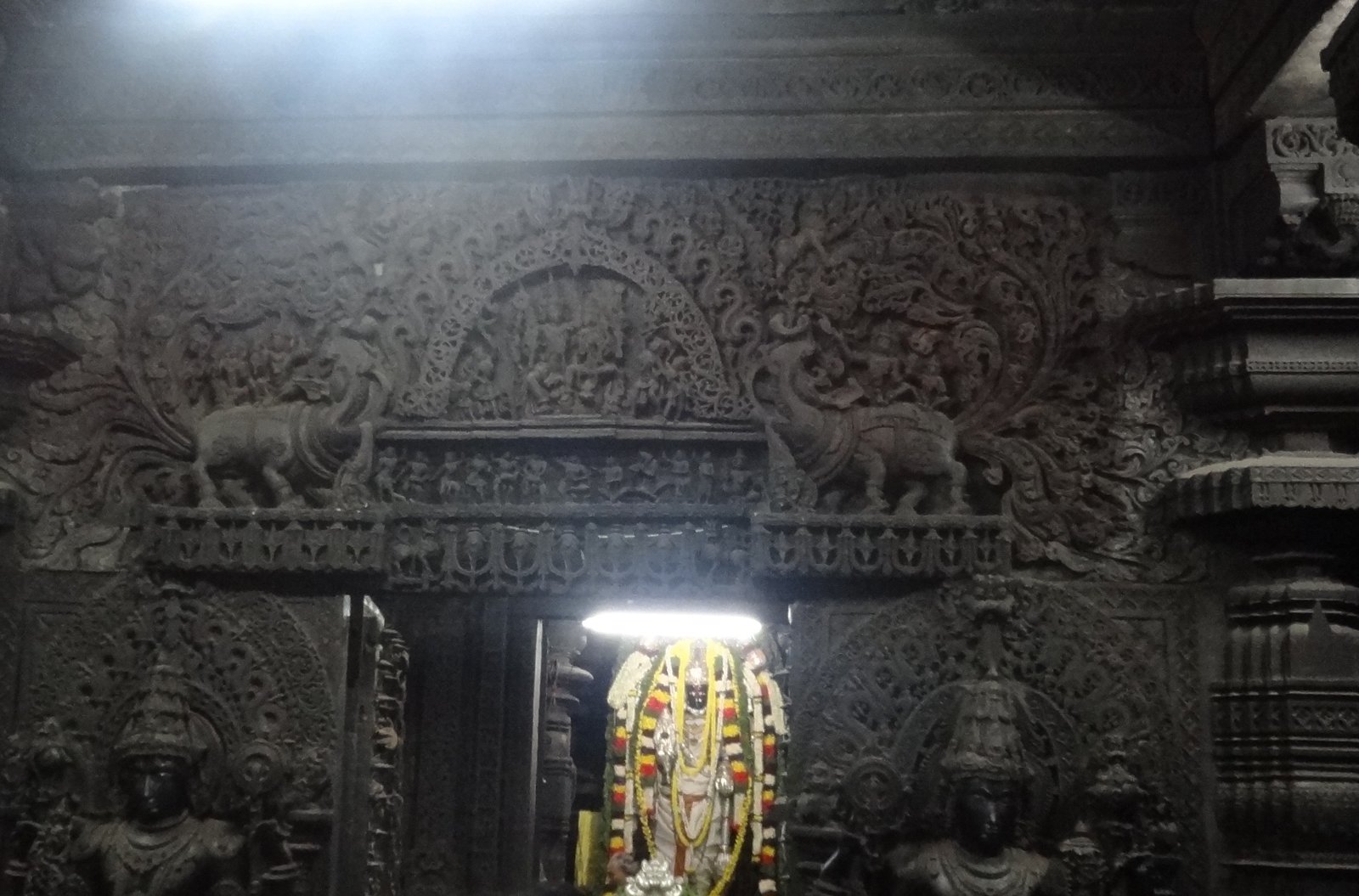
Garbha=Womb and Ālaya=abode. So, Garbhālaya is the innermost sanctum of the temple. Why to call this inner-space as “garbha”? That is to say that a devotee enters into the womb of NATURE (temple) as a seed, transforms into a fetus and exits it becoming a true human or baby of mother Nature. It is around this concept that a devotee undertakes “Pradakṣiṇa or Parikrama or Revolving around the temple clockwise”. Why clockwise? When a sperm enters a womb, fertilizes an ova, it exits only after a full rotation i.e., fetus rotates before its birth. This rotation is aggrandized into the concept of parikrama around the inner sanctum. This lets us take a second birth in the presence of lord. That is the concept here.
So, it is in this WOMB’s center that the lord’s idol exists. This center is also a replica of our “heart center” – Anāhata. That is why, the design of garbhālaya has a cave like structure as we look from the point of erection of the idol. The heart center is where the actual “I AM (jīva)” exists and it is also where the lord exists (so says scriptures). Whatever you utter in the garbhālaya, it reverberates. This concept of echo is brought in the inner sanctum to suggest the concept of we being the echoes of LORD just like his echos are what sustaining us in the form of pulsations of heart.

The main idol in the garbhālaya are called pradhāna vigraha or pradhāna mūrthi. Each idol forms the epitome of the temple. Worship, structure and utterances of mantrās all change depending on the idol installed. Different idols have different forms. Though lord is ONE, his manifestations are many. We said earlier that we are going from without to within. That is why there are many different forms of idols. From these variegated idols, we irrigate our thoughts and reap the crop of devotion and live our existence in HIS realization of satisfied hunger of devotion. This idol is also the soul of temple and similar to soul in our heart.
We have seen, in a bird’s eye view,as to what temples are. The same depth awaits us in the exploration of idols. Let us take 2 examples – Shiva and Saraswathi for our article. One must find similar methods to go deep into idol-symbolism of all other gods and goddesses.
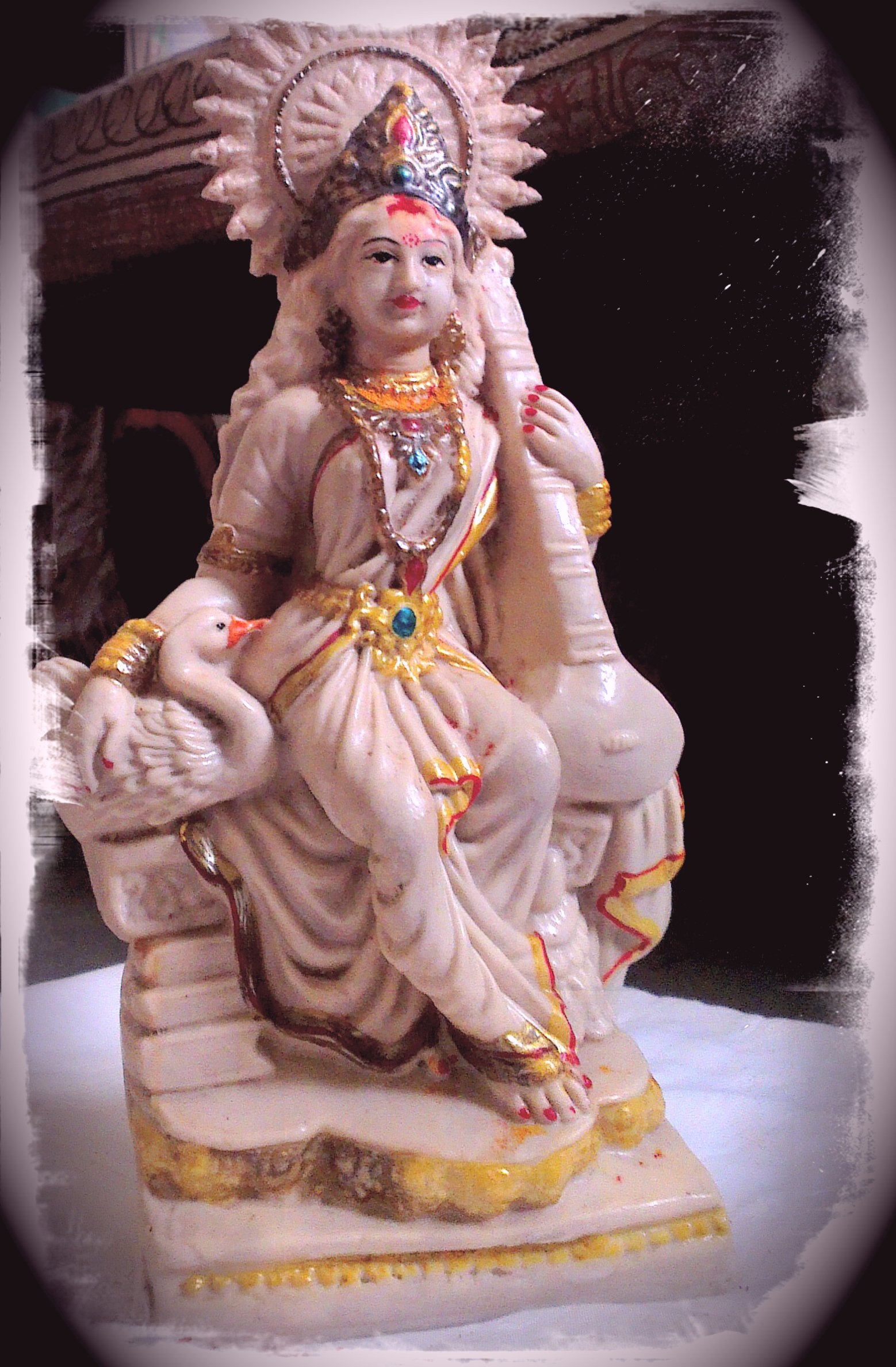
Goddess saraswathi, as the story goes, is daughter as well as wife of creator BRAHMA. Some may have doubts as to how one can marry their own daughter. These kind of doubts arise when one does not dig deep and starts to ask just for sake of showing intellectual superiority. If it were a genuine humble doubt, the doubt would not even arise, for there exists a clarity in such minds. Anyway, for those to whom such questions are put, I will try to explain the truth.
Saraswathi is the WORD uttered by Brahma. Before utterance, the WORD was with Brahma. Thus she was his daughter, contained in him. When she was uttered, SHE became his expression. In vēdic lore, it is customary to show immutable as husband and the variety of attributes associated with this immutable entity as wife. For example, SUN is husband and sunlight is his wife. In similar fashion, Saraswathi, being expression of creator, became his wife.
Symbolism of Saraswathi’s idol is our main motto here. Let us go into it. Her idol is often exists as follows:
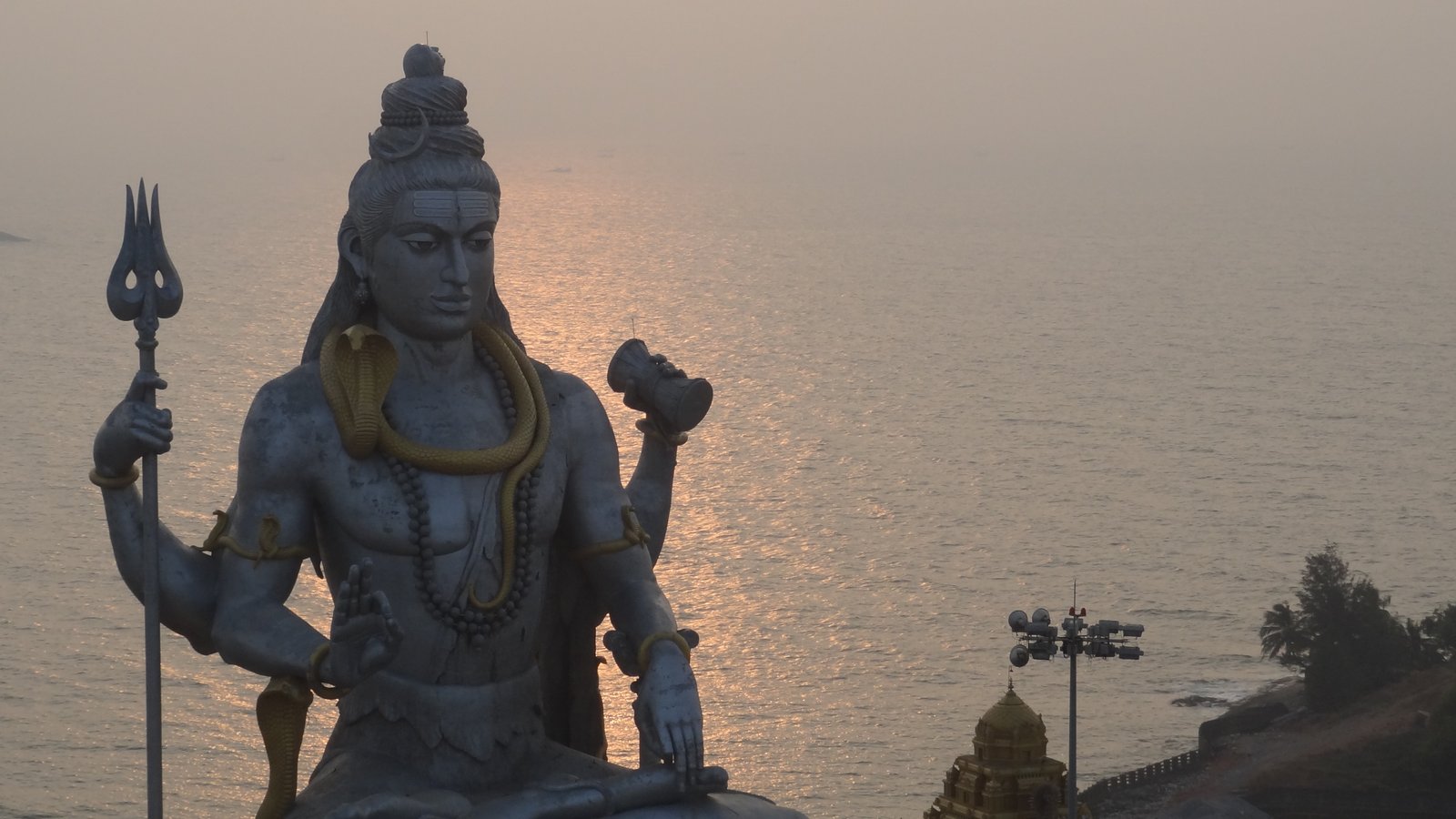
Shiva is the lord of dissolution. There are two Shivas in scripture: Sadā Shiva and just Shiva. When it is Sadā Shiva, there is nothing to speak about – He is the lord absolute. But when its just shiva, this 2nd shiva belongs to the trinity and thus is lord of dissolution. Shiva has his symbolism in the following which revolves around this concept of dissolution:
There is more to speak. But I just touched upon few things here. May be in future article(s) we can go deep into symbolism of Gods’ idols. Every god is paired i.e., they exist in form of couples. The coupling is not gendered but as I mentioned – based on the cause and effect relation.Every god or goddess has their own structure of temple, idol, method of worship, etc. One can not mix these. Having correct and thorough foundations on these aspects helps us better approach the mystery veiling Hinduism.
Thus, we have explored, very briefly, the concept behind temples, gods and goddesses.